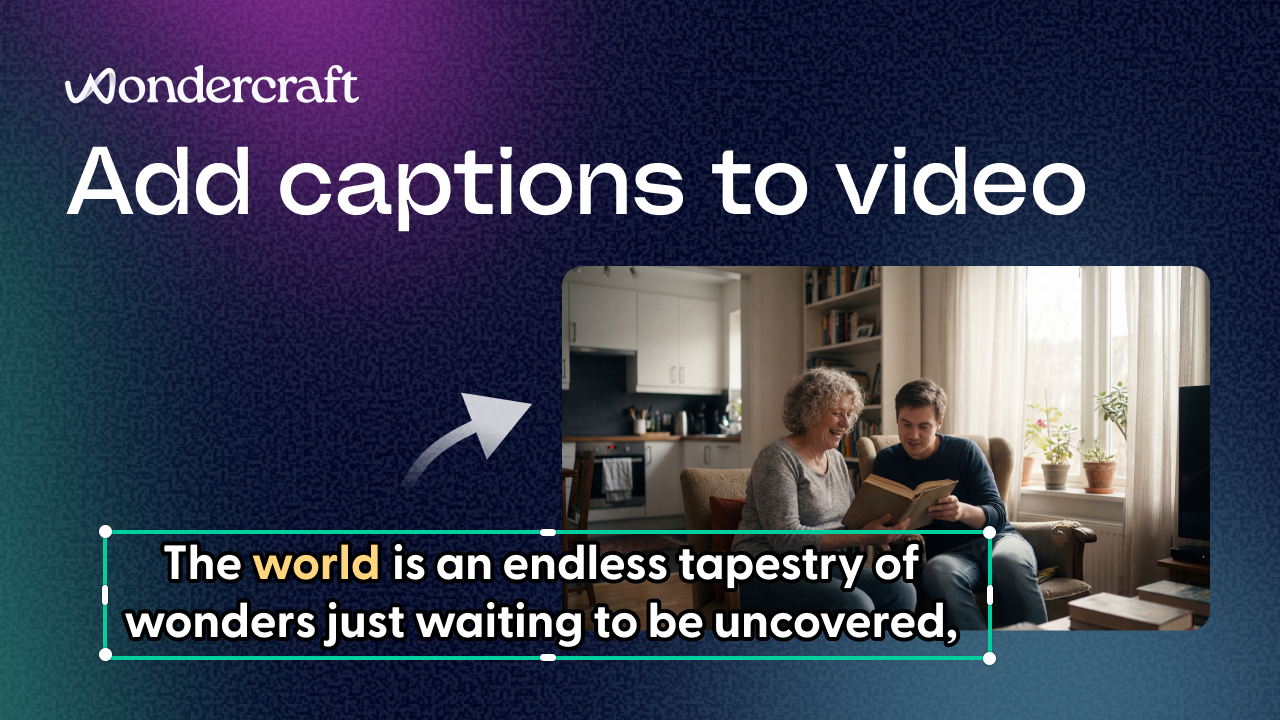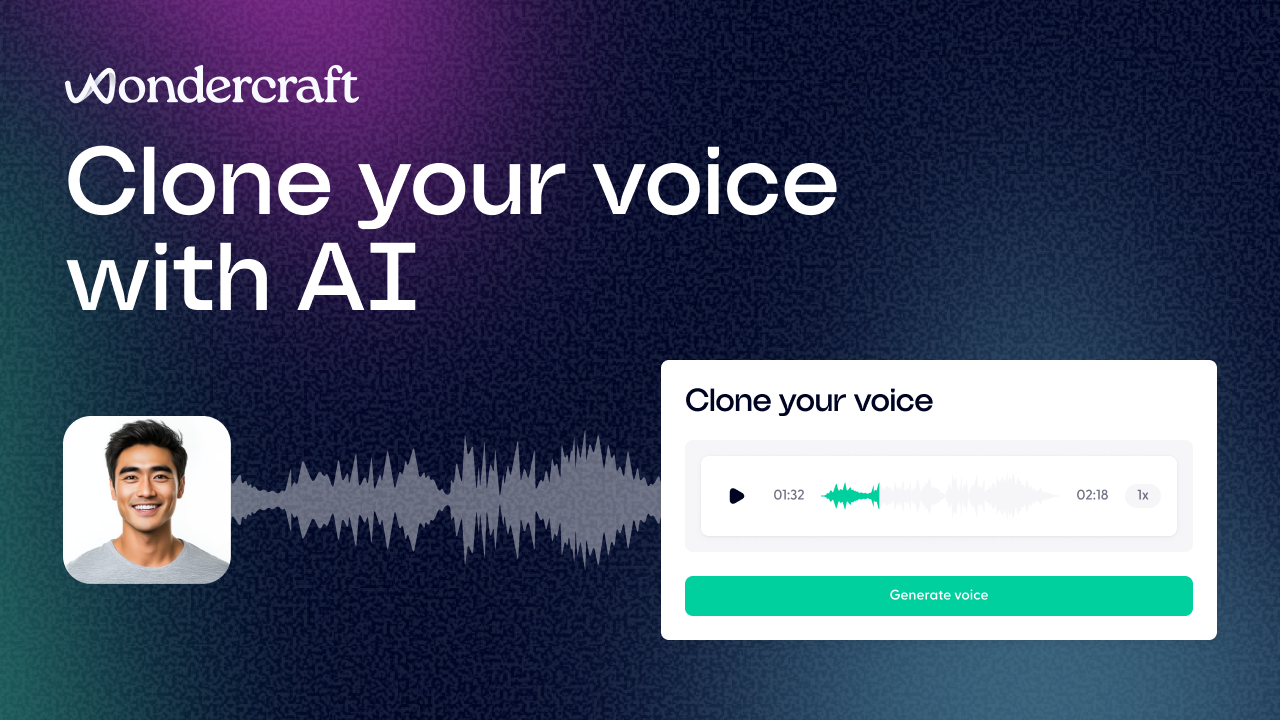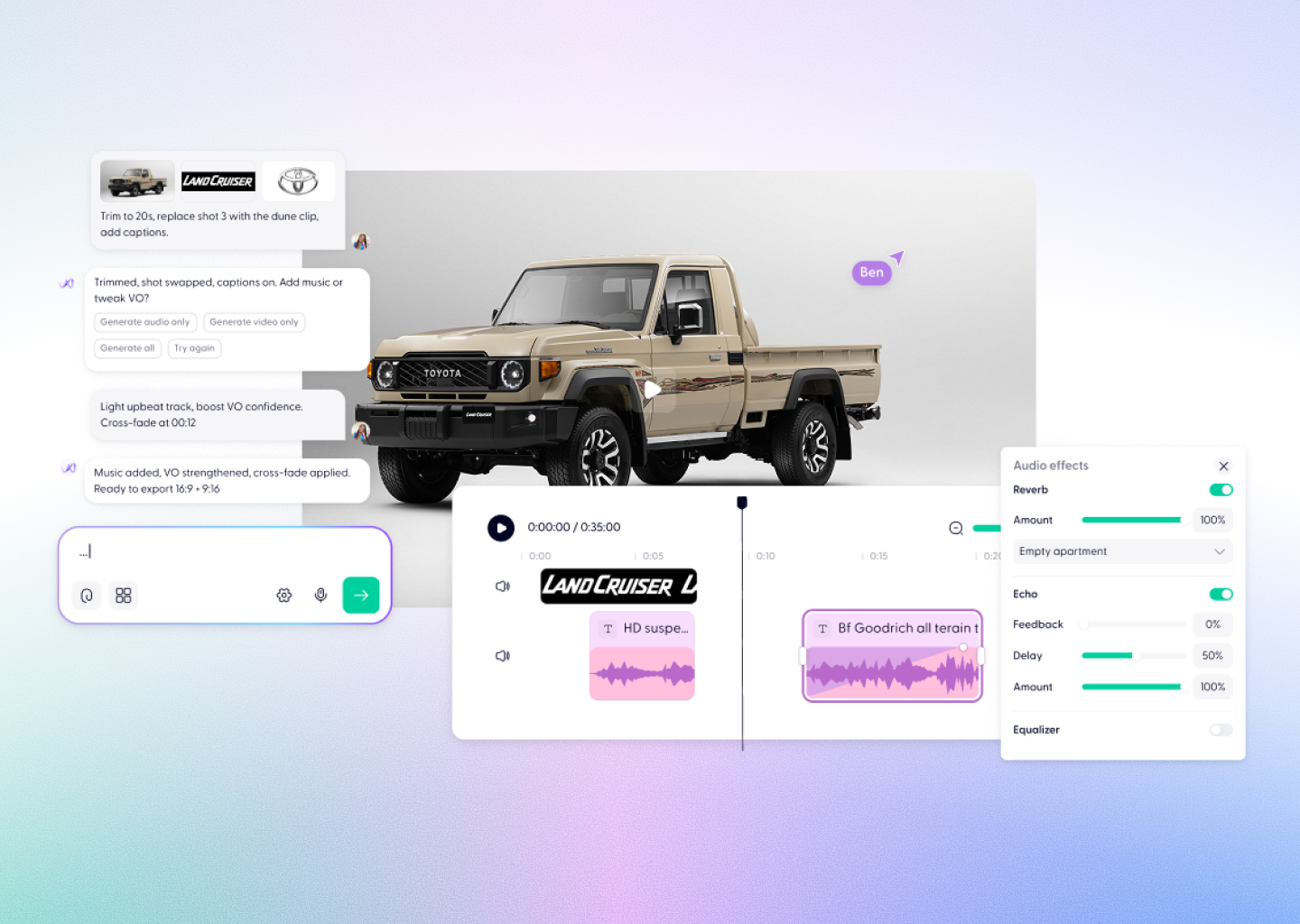


These two tools get shortlisted together, but they are built around different assumptions. HeyGen is organised around a synthetic presenter. Wondercraft is organised around producing a finished piece of content, with or without a presenter in it.
All pricing below was checked against both companies' public pricing pages on 21 August 2026. Pricing in this category changes often, so verify before deciding.
What is the main difference between Wondercraft and HeyGen?
HeyGen generates avatar-led video: you supply a script, an avatar delivers it. Wondercraft generates the whole piece, including scenes, B-roll, voice, music, and images, and includes a timeline editor plus an AI agent in the same product. Avatars are one option in Wondercraft rather than the organising principle.
The practical consequence: if your video needs a person on screen, HeyGen is purpose-built for that. If it needs anything else, you will be working around the presenter.
How much does each cost?
Wondercraft
- Free: $0, 150 credits, up to 720p, limited model access. Output is for non-commercial use only.
- Creator: $25/month, or $21/month billed annually. 1,000 credits, no watermark, full commercial rights, all premium models, API access.
- Pro: $45/month. 2,000, 4,000, or 6,000 credit tiers. Up to 3 seats, 4K upscaling, unlimited custom AI characters, up to 3 concurrent generations.
- Enterprise: custom, with SLA, DPA, and indemnity on generated output.
HeyGen
- Free: 1 to 3 videos per month, watermarked, 720p.
- Creator: $29/month, or $24/month annually. 600 credits.
- Pro: from $49/month, tiered upward by credit volume.
- Business: $149/month plus $20 per seat. 1,500 credits, SSO, SCORM export.
One caution on comparing credit counts. A credit does not mean the same thing on both platforms. HeyGen documents roughly one credit per three seconds of current-quality avatar video. Wondercraft credits are spent across video, audio, images, music, and voice at varying rates. Comparing the raw numbers will mislead you. Compare what you can actually produce for the money on your own brief.
Do unused credits roll over?
On both platforms, yes, with the same shape on monthly plans. Wondercraft rolls unused credits into the following month for as long as your subscription stays active; they expire after that. HeyGen does the same for monthly subscribers.
HeyGen is more generous on annual plans, where credits accumulate until the renewal date rather than expiring after a month. If you buy annually and produce in bursts, that is a genuine advantage.
Wondercraft's free tier refreshes credits monthly without accumulating them. Both platforms forfeit unused credits if you cancel to a free plan.
What happens when you run out of credits?
This is the sharper structural difference.
On HeyGen, one-time credit packs are limited to the Business plan at $149/month, priced around $5 per 100 credits. Creator and Pro users who run short have to upgrade to a higher plan tier.
On Wondercraft, top-ups are available on every plan at $3 per 100 credits, including the free tier. For teams with uneven production schedules, that is the difference between a permanent plan upgrade you only needed for one busy week and buying what you actually used.
Where does HeyGen win?
- SCORM export. On the Business plan, which matters if your LMS requires SCORM packages rather than MP4 uploads.
- Annual credit accumulation. As above, better than a one-month rollover for annual buyers.
Where does Wondercraft win?
- Scope. Video, audio, images, music, and voice in one subscription. Podcasts, audio ads, and narrated content are first-class, not adjacent.
- Output beyond talking heads. Full scenes and motion, not a presenter against a background.
- Avatar realism and range. HeyGen has invested heavily here and it shows. If a photoreal presenter is the deliverable, it is a specialist.
- Lip-synced translation at scale. Translation into 175+ languages with matching lip sync is genuinely hard to replicate.
- Top-ups on any plan, cheaper per credit and without a plan upgrade.
- A real timeline editor included. Generation and precision editing in one place.
- Commercial rights from the entry paid tier. Creator at $25 includes full commercial rights and no watermark.
Which should you choose?
Choose HeyGen if you need SCORM.
Choose Wondercraft if your output is mixed, if you also produce audio, or if you want generation and editing in one tool without a second subscription, or if most of what you produce is a presenter delivering a script, especially at multilingual scale.
If you are unsure, run the same real brief through both. The differences appear on the second and third video, not the first.